Jute Bags vs Non-Woven Bags: Which is Better for Bulk Orders?
January 20, 2026 · Jute Bag Factory
Jute bags last longer, carry 8–15 kg, biodegrade fully and sit outside plastic-ban rules. Non-woven PP bags cost 20–40% less and print sharper, but they are plastic and wear faster. For most bulk retail, gifting and promotional orders, jute is the better buy.
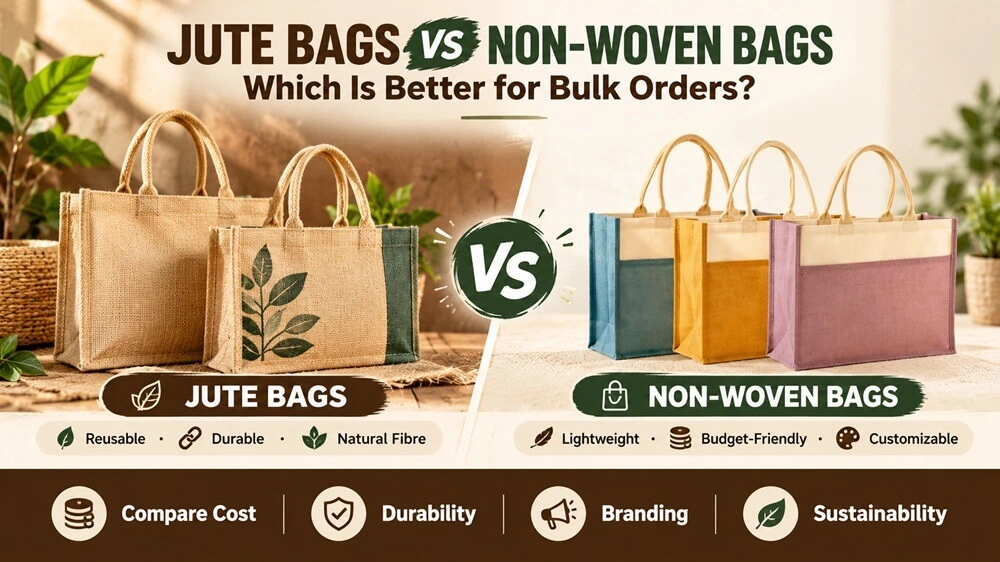
When businesses order promotional or retail bags in bulk, the choice usually comes down to two materials: jute and non-woven polypropylene (PP). Both are reusable and cheap at scale — but they are very different products, and the difference matters more than most buyers realise.
What Each Material Actually Is
Jute bags
- ✓ Natural plant fibre, grown mainly in India and Bangladesh
- ✓ Biodegradable and compostable within months
- ✓ Woven fabric — strong, reusable, premium feel
Non-woven bags
- • Polypropylene (PP) plastic, bonded rather than woven
- • Fabric-like feel — still a plastic bag
- • Reusable, but does not biodegrade
Despite the fabric-like feel, non-woven bags are plastic bags. That single fact drives most of the differences below.
Jute vs Non-Woven at a Glance
| Factor | Jute bags | Non-woven PP |
|---|---|---|
| Material | Natural plant fibre | Polypropylene plastic |
| Cost per unit | Slightly higher | Often 20–40% cheaper |
| Load & lifespan | 8–15 kg; lasts years | Tears at seams; wears in sunlight |
| Print quality | Bold logos; laminated jute for detail | Sharpest multi-colour print |
| Sustainability | Biodegradable; absorbs CO2 while growing | Petroleum-based; never biodegrades |
| Plastic-ban risk | None | Thin bags can be restricted |
| Best for | Retail, gifting, events, brand image | Lowest-budget giveaways only |
Cost Per Unit
Non-woven bags are the cheapest reusable option at high volumes. Jute costs a little more, but the gap has narrowed as manufacturing has scaled — see our jute bags wholesale price guide for current ranges.
- Non-woven is often 20–40% cheaper per piece than a comparable jute bag.
- Jute’s extra cost is usually recovered in more reuses and a stronger brand impression.
- If lowest unit price is your only criterion, non-woven wins — but read the durability and sustainability sections before deciding.
Durability and Lifespan
For groceries, conferences and daily shopping, jute is the tougher option. Customers reuse a sturdy jute bag far more often, which means your logo keeps working longer.
- A well-made jute bag lasts years and comfortably carries 8–15 kg.
- Non-woven bonded fibres tear at seams under heavy loads.
- Non-woven also degrades faster in sunlight, so outdoor or repeat-use campaigns favour jute.
Print Quality
Choose the surface that matches your artwork — not the other way around.
- Non-woven’s smooth surface gives the sharpest print for fine detail and multi-colour logos.
- Jute’s coarse weave suits bold, simple branding.
- Laminated jute bags close most of the gap for detailed designs; a cotton front panel is another option for complex artwork.
Sustainability — Where the Real Gap Is
This is where the materials genuinely differ. For brands with sustainability messaging, non-woven bags can actively undermine the claim.
- Jute is 100% natural, needs minimal water and no pesticides, and absorbs CO2 while growing.
- Jute bags biodegrade within months; non-woven PP never does.
- Thin non-woven bags can fall under state plastic-ban rules. Jute bags carry no such risk.
The Verdict for Bulk Buyers
Choose jute if you need
- ✓ Retail, promotional campaigns, gifting or events
- ✓ Bags that last years and carry heavy loads
- ✓ A genuine eco-friendly story and no plastic-ban risk
Choose non-woven only if
- • Lowest unit cost is the only criterion
- • Eco-positioning does not matter to your brand
- • You need very fine, multi-colour print on a one-off giveaway
We manufacture jute bags in-house, so you get factory pricing even on customised orders. If you're still evaluating suppliers, our 10-point checklist for choosing a jute bag manufacturer will help you separate real factories from traders.
Frequently Asked Questions
Ready to Order Eco-Friendly Bags in Bulk?
Get factory-direct pricing on jute bags with custom branding — MOQ from just 100 pieces.