How to Choose a Jute Bag Manufacturer in India: A 10-Point B2B Checklist
January 25, 2026 · Jute Bag Factory
A practical 10-point checklist for choosing a jute bag manufacturer in India — quality checks, samples, GST compliance, MOQs and red flags to avoid.
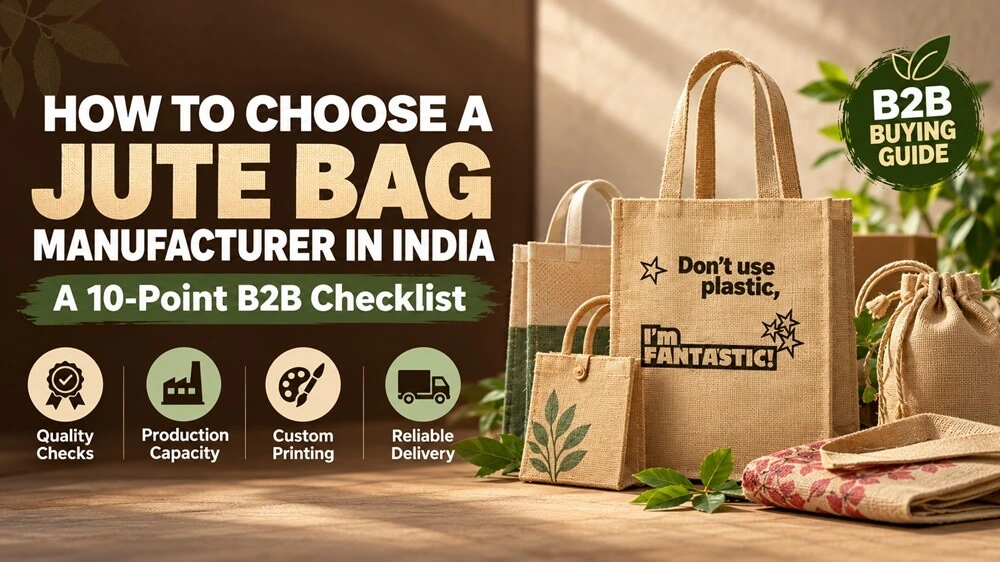
India has hundreds of jute bag suppliers — but the gap between a real manufacturer and a middleman with a website is enormous. The wrong choice means inconsistent quality, missed deadlines, and a logo that fades after a few washes. Use this checklist before placing your order.
1. Manufacturer or Trader?
Ask directly: "Do you produce in-house?" A genuine manufacturer owns the stitching, printing and finishing — which means better pricing, real customisation, and accountability. Traders resell factory output with a margin and limited control. Signs of a real factory: they can show production photos, discuss fabric GSM, and offer sampling before bulk production.
2. Check Product Range and Specialisation
A specialised jute manufacturer should offer a real range — shopping bags, wine bags, pouches, file folders and more — not just one generic tote. A wide catalog signals real production capability.
3. Always Order a Sample First
Never place a bulk order without a physical or detailed photo sample of your actual product — fabric weight, stitching, print placement and colour. Reputable manufacturers offer pre-production samples, often adjusted against the final order value.
4. Verify GST Registration and Paperwork
Ask for the GSTIN and verify it on the GST portal. A proper GST invoice isn't just compliance — it lets you claim input tax credit and creates accountability. Any supplier reluctant to share their GSTIN is a red flag.
5. Understand Their MOQ
Reasonable MOQs for printed jute bags start around 100-500 pieces. Very high MOQs on simple orders suggest outsourced production; suspiciously low MOQs with rock-bottom prices usually mean thin fabric and weak stitching.
6. Ask About Printing and Branding Options
A real factory offers multiple options — screen printing, block printing, embroidery — and advises which suits your artwork. If they can only say "yes, printing available" without detail, be careful. If you're also deciding between materials, our jute vs non-woven comparison explains the trade-offs.
7. Get Lead Time in Writing
Healthy production timelines run 7-15 working days after artwork approval, plus transit. Get the timeline — and what happens if it's missed — in writing.
8. Look for a Physical Address and Real Photos
Check for a verifiable business address, and look at product photos critically — factory photos with real bags on real tables, not perfect stock imagery. If every image looks like a stock photo, ask for a video call walkthrough.
9. Test Their Communication
How a supplier handles your enquiry predicts how they'll handle your order. Do they respond within a day? Do they ask smart questions about usage, artwork and timelines? Vague or slow replies early on get worse later.
10. Compare Value, Not Just Price
The cheapest quote often means the thinnest fabric. Compare quotes on fabric GSM, stitching, print colours and handles — a slightly higher price for a bag customers reuse for years is cheaper per brand impression than a bag that falls apart in a month. To benchmark what's fair, check our wholesale price guide for jute bags in India.
The Short Version
Pick a GST-registered manufacturer (not a trader), insist on a sample, verify the physical address, and compare quotes on specifications, not just price. Those four filters eliminate most bad options immediately.
Frequently Asked Questions
Talk to a Real Manufacturer
We produce every bag in-house — share your requirement and get a quote plus free sample guidance.